Our Research: The Scientific Foundation of X-Bows Ergonomics
Dr. SigAt X-Bows, we believe that ergonomic design should be guided by anatomy, not legacy. Our research focuses on identifying the biomechanical flaws of standard keyboards and engineering solutions that prioritize long-term musculoskeletal health.
Core Research Objectives:
- Eliminate Ulnar Deviation: Realigning the physical layout to allow for straight wrist posture.
- Reduce Forearm Pronation: Utilizing natural angles to minimize the crossing of the radius and ulna bones.
- Optimize Finger Travel: Mapping the radial arc of human digits to create a high-efficiency columnar grid.
1. The Biomechanics of Ulnar Deviation
Standard keyboards require the user to bend their wrists outward to align their fingers with the horizontal rows. This is known as Ulnar Deviation. Chronic ulnar deviation increases pressure within the carpal tunnel and puts undue strain on the tendons of the forearm.
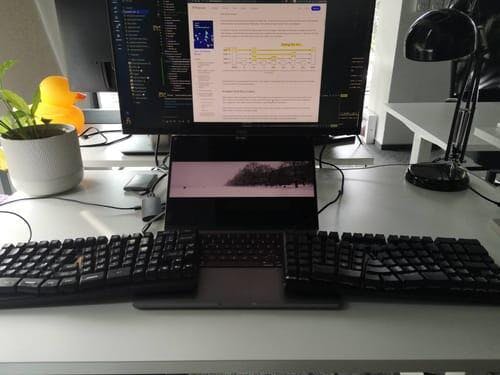
The X-Bows Solution: By utilizing a Radial-Columnar Layout, we angle the keys inward. This allows the user to maintain a neutral, straight wrist position, effectively reducing the mechanical load on the wrist joints during long typing sessions.
2. Forearm Pronation and Muscle Tension
Typing on a flat surface forces the palms to be completely parallel to the desk. This 90-degree Pronation requires the radius and ulna bones in the forearm to cross, which can lead to fatigue in the supinator and pronator muscles.
Our research supports the use of natural angling and, when combined with proper desk height, helps users achieve a more relaxed "handshake" position. This reduces static muscle tension and promotes better circulation to the hands.
3. Finger Path Efficiency: Staggered vs. Radial
The traditional staggered grid forces fingers to move in diagonal paths. Biomechanically, fingers are designed for Flexion and Extension—a simple up-and-down motion. Staggered keys require "lateral micro-movements" that increase finger travel distance by up to 25% over a standard workday.
The Data: X-Bows' radial columns match the natural fan-shaped arc of the fingers. By aligning the keys with the fingers' natural path, we reduce the total physical effort required per keystroke, sustaining higher typing accuracy and speed over longer periods.
4. Functional Layout Optimization
Our research into Functional Layouts led to the development of the Centralized Thumb Cluster. On a standard board, the weakest finger (the pinky) handles the highest-impact keys: Enter, Backspace, and Shift. By moving these to the center, we leverage the power of the thumbs, which are significantly more robust and better suited for repetitive tasks.
Comparative Analysis Summary
| Metric | Standard Keyboard | X-Bows Radial |
|---|---|---|
| Wrist Angle | 15°+ Ulnar Deviation | 0° (Neutral Alignment) |
| Finger Motion | Diagonal/Staggered | Linear/Natural Flexion |
| Primary Load | Pinky Finger | Dual Thumbs |
Our goal remains constant: to provide tools that respect human biology. By choosing X-Bows, you are choosing a typing experience backed by biomechanical truth and a commitment to workplace wellness.